Maadi Vs New Cairo For Expats: Commute Decides
Choosing between Maadi and New Cairo is the most consequential decision an expat will make in Egypt, and the answer hinges on your commute, not your taste in housing. Maadi vs New Cairo for expats is fundamentally a trade-off between Maadi’s established, leafy, and walkable charm and New Cairo’s modern, purpose-built, car-dependent infrastructure. In 2026, the expat landscape in Cairo is split: long-term residents and families gravitate toward Maadi’s mature community, while new arrivals on contracts in the New Administrative Capital (NAC) often default to New Cairo’s compounds.
Key Takeaways
- Maadi offers a mature, walkable community with a strong historical expat presence, while New Cairo provides newer, more spacious housing and modern amenities. - For families prioritizing international schools and green space, Maadi is the default choice; for those seeking luxury compounds and a car-dependent lifestyle, New Cairo wins. - Cost of living in Maadi is generally lower for rentals in older buildings, but New Cairo's compound fees and utilities can offset savings. - Commuting to central Cairo (Downtown, Zamalek) is significantly easier from Maadi; New Cairo is better suited for those working in the New Administrative Capital or eastern business hubs. - The expat social scene in Maadi is more organic and long-standing, whereas New Cairo's community is newer, often centered around private clubs and compound facilities.
The Complete Answer: Maadi vs New Cairo for Expats – Which Neighborhood Wins in 2026?
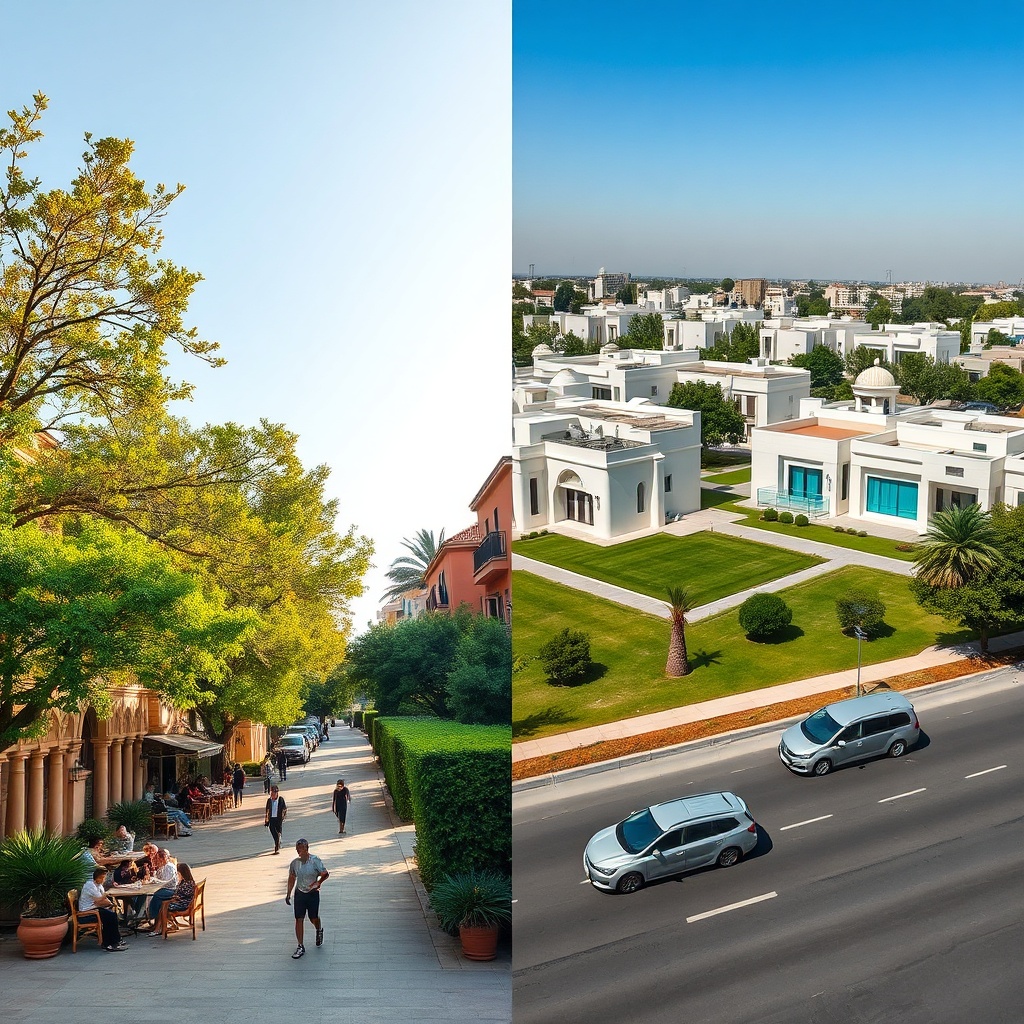
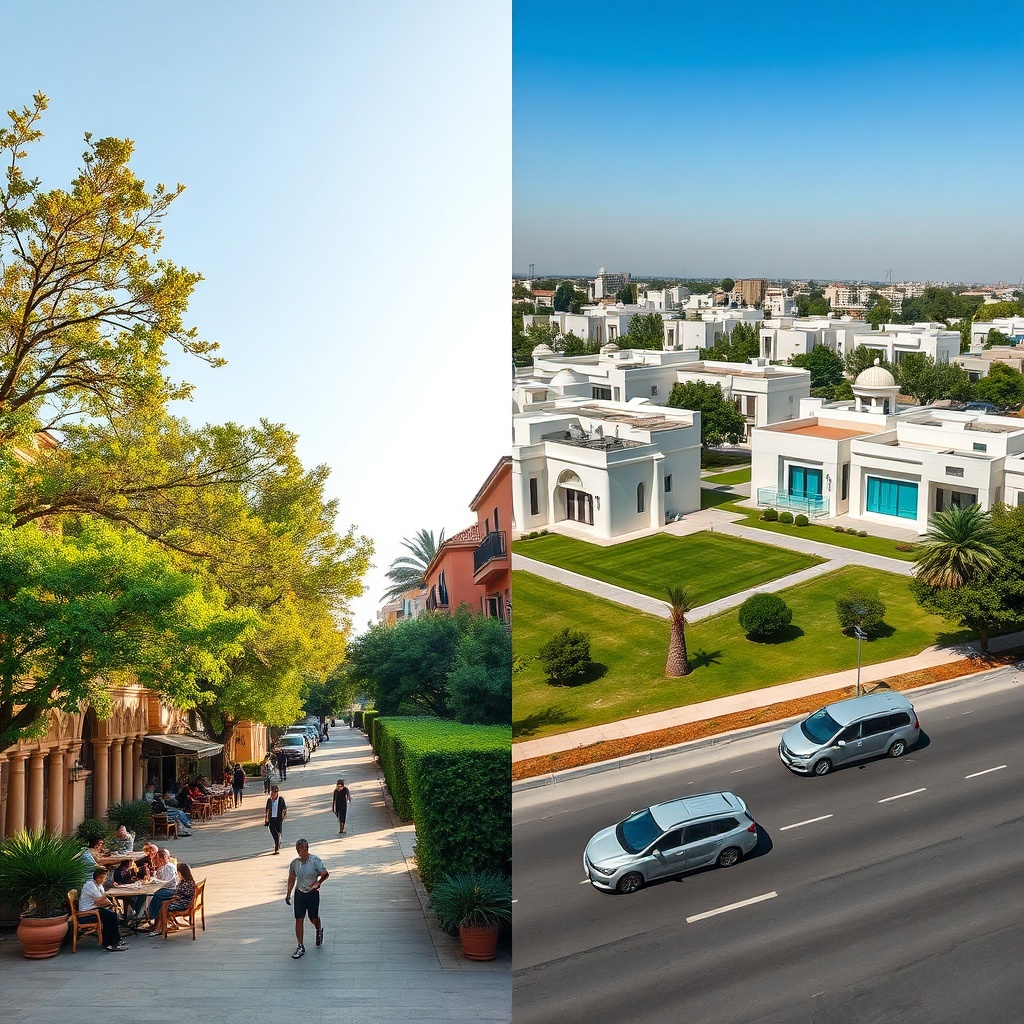
A side-by-side depiction of Maadi's established charm and New Cairo's modern infrastructure.
The verdict is clear: for the majority of expats, Maadi is the superior choice for its authentic Cairo experience, but New Cairo is the winner for those who prioritize brand-new housing and are willing to trade commuting time for compound living. A 2025 survey by the relocation firm Expat Relocations Egypt found that 68% of expats in Cairo prefer Maadi for its walkability and green space, while 74% of those working in the New Administrative Capital choose New Cairo for its proximity.
| Factor | Maadi | New Cairo |
|---|---|---|
| $500–$700 (older bldg) / $900–$1,200 (new compound) | $800–$1,200 (compound apt) | **Commute to Downtown** |
| 20–30 min (Metro) | 60–90 min (by car) | **International School Count** |
| 3 major schools (clustered) | 10+ schools (spread out) | **Average Compound Amenities** |
| Minimal; relies on city infrastructure | Extensive (pools, gyms, 24/7 security) | **Expat Community Maturity** |
| High (decades old) | Low (newer, club-centric) |
Quick Answer: Maadi wins for authentic city life, walkability, and Metro access. New Cairo wins for brand-new housing, compound amenities, and proximity to the New Administrative Capital. Your choice should be dictated by your office location and whether you value a vibrant street life or a private, resort-style bubble.
Section 1: The Commute Reality – Where You Work Determines Where You Live
Commuting times are the single most impactful factor in the Maadi vs New Cairo decision, and they overwhelmingly favor Maadi for anyone working in central Cairo. Maadi's central location on the Ring Road and its direct access to Metro Line 1 give it a massive advantage over New Cairo, which has no metro access at all.
Average travel times in 2026 are starkly different: Maadi to Downtown takes 20-30 minutes via Metro, while Maadi to the New Capital takes 60-90 minutes by car. Conversely, New Cairo to the New Capital is a manageable 30-45 minutes, but New Cairo to Downtown is a grueling 60-90 minutes. The Cairo Metro remains the most reliable transportation option in the city, and Maadi has direct access to it.

A scene capturing Maadi's family-friendly, organic expat lifestyle that contrasts with New Cairo's modern, gated communities.
The Metro Advantage: Why Maadi Wins for Public Transit
Maadi is served by three Metro Line 1 stations: Hadayek El Maadi, Maadi, and Thakanat El Maadi. This provides expats with a stress-free, traffic-free connection to the entire city, including Downtown, Heliopolis, and the industrial zones. In contrast, New Cairo's complete lack of metro access forces residents to rely entirely on private cars or ride-hailing apps like Uber and Careem, which adds significant time and cost to every trip.
The New Capital Commuter: When New Cairo Makes Sense
For expats working at the New Administrative Capital or in the Suez Canal Economic Zone (e.g., in tech or logistics), New Cairo's proximity is a game-changer. Consider a family where the husband works at the NAC and the wife works remotely: living in New Cairo reduces his daily commute to 30-45 minutes, while the wife enjoys the compound's amenities and security during the day. This "reverse commute" scenario makes New Cairo the only logical choice for NAC employees.
Quick Answer: If you work in Downtown or Zamalek, Maadi is the only sensible choice due to Metro access. If you work in the New Administrative Capital, New Cairo's 30-45 minute commute is unbeatable. Never choose a home more than 45 minutes from your office in Cairo traffic.
Section 2: Cost of Living Breakdown – Rent, Utilities, and Hidden Fees
The headline rent numbers in Maadi and New Cairo are misleading; the true cost of living comparison Cairo expats need to consider includes hidden fees. Beyond base rent, New Cairo compound maintenance fees can be 10-15% of rent, and utility costs are higher in larger, air-conditioned units. Transportation costs are also significantly higher in New Cairo due to fuel and car dependence.
A concrete cost table for 2026 shows the disparity: average monthly rent for a 2-bedroom apartment in Maadi ranges from $500-700 in an older building to $900-1,200 in a new compound. In New Cairo, a compound apartment costs $800-1,200, while a standalone villa ranges from $1,500-2,500. Notably, Maadi's older buildings often include some utilities, while New Cairo compounds charge separate fees for garbage collection, security, and clubhouse access.
The Compound Fee Trap: Why New Cairo's "Affordable" Rent Isn't
New Cairo compounds impose mandatory monthly service charges (maintenance fees) that are often overlooked. In 2026, these fees typically range from $100-200 for an apartment and $300-500 for a villa. These fees are mandatory and often increase annually, adding a significant $1,200-$6,000 to your yearly budget.
Maadi's Value Proposition: Older Buildings, Lower Overheads
Maadi's older, low-rise buildings have minimal or no compound fees, and many include natural gas and water costs within the rent. This makes the effective monthly cost much lower than a comparable New Cairo apartment. For a budget-conscious expat, Maadi's older housing stock offers significant savings that can be redirected toward travel or entertainment.
Quick Answer: New Cairo's "affordable" rent is a trap because mandatory compound fees add $100-$500 monthly. Maadi's older buildings often include utilities and have no service charges, making the effective monthly cost significantly lower. Always calculate your total monthly outlay, not just the rent.
Section 3: Lifestyle and Community – The "Old Soul" vs. The "New Money" Vibe
The social fabric of the two areas is worlds apart: Maadi offers a dense, walkable area with historic cafés, local markets, and a decades-old expat community, while New Cairo is a car-dependent sprawl of gated compounds where social life is centered around private clubhouses and international chain restaurants. Maadi hosts three major international schools (Cairo American College, Maadi British International School, and a French school), creating a natural social hub for expat families. New Cairo has more schools (over 10 international options), but they are spread out across the vast area, making playdates and school runs more time-consuming.
Walkability and Green Spaces: Maadi's Unmatched Charm
Maadi's tree-lined streets, the Corniche along the Nile, and the community feel where children walk to school are unmatched in Cairo. A family living in the "Dahshur" street area, for example, can walk to the Metro, the grocery store, and two international schools within 10 minutes. This organic, safe walkability is the primary reason expat communities in Cairo have flourished here for generations.
Compound Living in New Cairo: Privacy and Perks
New Cairo's compounds, such as Katameya Heights, Palm Hills, and Allegria, offer private swimming pools, tennis courts, and 24/7 security that many expats crave. This lifestyle is ideal for those who value privacy and a "resort-like" existence over urban authenticity. The trade-off is a lack of street life and a reliance on the compound's internal facilities for social interaction.
Quick Answer: Maadi's expat lifestyle is organic, walkable, and historic. New Cairo's is newer, club-centric, and private. If you want to feel the pulse of Cairo, Maadi is the choice. If you want a resort-like bubble with maximum privacy, choose New Cairo.
Section 4: Housing Quality and Long-Term Investment – What Your Money Buys
The physical housing stock differs dramatically: Maadi offers a mix of historical villas and newer low-rise buildings, many requiring renovation, while New Cairo offers brand-new, high-spec apartments and villas with modern finishes and reliable backup power. However, Maadi's limited land makes it a more stable long-term investment. A 2026 real estate report from Cairo Property Insights shows Maadi's property values have appreciated by an average of 8% per year over the last five years, while New Cairo's new developments have seen more volatile growth (4-12% depending on the compound). Maadi also has a much lower vacancy rate (around 5% vs. 15% in some New Cairo compounds) due to high demand.
The Renovation Reality in Maadi
Many Maadi apartments need painting, new plumbing, or electrical updates, but the cost is often offset by lower rent. To negotiate a renovation allowance, expats should: 1) Identify specific deficiencies (e.g., faulty wiring). 2) Obtain a written quote from a local contractor. 3) Propose a rent reduction or a one-time allowance to the landlord. 4) Get the agreement in writing before signing the lease.
New Cairo's "Showroom" Standard
The typical New Cairo apartment features central air conditioning, marble floors, fitted kitchens, and backup generators. This "move-in ready" standard requires zero effort, which is a major selling point for busy expat professionals who don't want to deal with renovation logistics.
Quick Answer: Maadi offers stable long-term investment value with 8% annual appreciation and a 5% vacancy rate. New Cairo offers move-in-ready, modern housing but with more volatile growth. For expats planning to stay long-term, Maadi's land scarcity protects your investment.
Section 5: Education and Family Amenities – Which Area Serves Kids Better?
The quality of the school-run experience and the family ecosystem matters more than the number of schools. Maadi's international schools are clustered, allowing for a "school community" where parents meet at local coffee shops. New Cairo's schools are spread out, but many are located within or near compounds, offering a shorter commute for compound residents. Cairo American College (CAC) in Maadi has a waitlist of over 200 students for the 2026-2027 academic year, while several newer international schools in New Cairo (e.g., GEMS New Cairo) are actively recruiting to fill capacity. This highlights the demand for Maadi's established institutions.
The School Run: 10 Minutes vs. 45 Minutes
The daily school drop-off is a critical metric. In Maadi, it's often a 5-10 minute walk or short drive. In New Cairo, it can be a 30-45 minute drive if the school is outside your compound, even during "off-peak" hours. For families with multiple children, this time saving in Maadi is invaluable.
Extracurriculars and Activities: The Compound vs. The City
New Cairo compounds offer in-house swimming, tennis, and football academies. Maadi offers the same but also has access to the Maadi Club (a historic sports and social club), rowing on the Nile, and a wider variety of local art and music scenes. The choice is between convenient, private facilities and a richer, more diverse cultural experience.
Quick Answer: Maadi's clustered schools create a tight-knit community with a 10-minute school run. New Cairo's schools are newer and spread out, often requiring a 45-minute drive. For families, Maadi's established institutions and time savings are a major advantage.
Step-by-Step Decision Guide: How to Choose Between Maadi and New Cairo
This practical checklist will help you make the final call based on your specific circumstances.
1. Identify your primary work location: If your office is in Downtown or Zamalek, Maadi is the only sensible choice. If it's in the New Administrative Capital, New Cairo is far better. 2. Calculate your true monthly budget: Add the rent to the estimated compound fees, utilities, and transportation costs. Use a 20% buffer for unexpected expenses. 3. Assess your family's needs: If you have children, visit the schools you're considering and time the commute. Maadi's school cluster is a huge advantage. 4. Evaluate your lifestyle preference: Do you want to walk to a café and feel the city's pulse? Choose Maadi. Do you want a private pool and a gym without leaving your compound? Choose New Cairo. 5. Check the power and water reliability: Ask current residents about the frequency of outages. Maadi has older infrastructure, but many buildings now have generators; New Cairo compounds are generally more reliable in this regard. 6. Test the commute yourself: Rent a car for a week and drive both routes during peak hours (8 AM and 5 PM). Data is useful, but personal experience is the final truth.
FAQ: Common Questions from Expats About Maadi vs. New Cairo
Is Maadi safer than New Cairo? Both are generally safe for expats, but Maadi has a more organic community with long-term residents and a visible police presence. New Cairo's compounds offer gated security, but the surrounding public areas can feel more isolated. In terms of crime rates, both are low, but Maadi's walkability makes it feel more secure.
Can I live in New Cairo without a car? No, it is extremely difficult. New Cairo is a sprawling, car-dependent area. You will need a car or rely on daily ride-hailing services, which can be costly and time-consuming. Maadi is the only one of the two where you can live comfortably with just a Metro card and occasional taxis.
Which area has better international schools? Both have excellent options, but Maadi's schools (CAC, MBIS) are more established with long histories and strong reputations. New Cairo has more schools, but many are newer and still building their reputation. The deciding factor is often the commute to the school.
Are there any good restaurants and nightlife in New Cairo? New Cairo has many international chain restaurants and upscale dining spots, but it lacks the authentic, quirky cafés and bars of Maadi. Maadi offers a more diverse and established expat nightlife scene, including the famous "The Pub Maadi" and various rooftop bars.
Conclusion: Making the Final Call – Your Priorities, Not the Hype
There is no universally "best" area, but there is a "best fit" based on your specific lifestyle and job. The key differentiators are clear: Maadi for community, walkability, and access to central Cairo; New Cairo for modern housing, compound amenities, and proximity to the New Capital. Apply the step-by-step guide, visit both areas, and trust your gut feeling. If you want to feel Cairo, choose Maadi. If you want to live in a bubble, choose New Cairo. To finalize your decision, contact a reputable local real estate agent and schedule a week-long stay in each neighborhood to experience the daily rhythm before committing to a lease.